

Introduction
Updated September 2026: Pricing, limits, integrations, and product features change. Verify current terms directly before subscribing.
A Shopify store can generate orders without building a retention system. The harder problem starts after the first visit: capturing permission, following up on abandoned carts, sending relevant post-purchase messages, and bringing previous customers back without creating a complicated software stack.
The best email marketing services for Shopify depend on the store’s stage. A new store may need a low-cost way to collect contacts and send a welcome series. A growing D2C brand may need customer segments, abandoned-cart flows, product recommendations, and revenue attribution. A larger team may need deeper data, multiple channels, and more advanced lifecycle automation.
This comparison evaluates Brevo, Klaviyo, Omnisend, Mailchimp, and Shopify Messaging against those decisions. It focuses on Shopify integration, automation, segmentation, sending limits, setup burden, and ecommerce fit rather than simply counting features.
Experience note: GSA has used Brevo, Klaviyo, Mailchimp, and Shopify Messaging. The comparison combines those first-hand workflow observations with current official documentation. It does not claim that every platform was used with the same store, contact volume, plan, or test period.
Best Email Marketing Services for Shopify: Quick Verdict
| Platform | Best fit | Strongest reason to choose it | Main trade-off |
|---|---|---|---|
| Brevo | Small D2C teams and mixed email/API workflows | Combines campaigns, automation, transactional email, and API access | Verify current ecommerce workflow depth and plan limits |
| Klaviyo | Advanced ecommerce segmentation | Shopify data, lifecycle flows, reporting, and cross-channel personalization | Pricing and complexity rise as profiles and activity grow |
| Omnisend | Ecommerce-first email, SMS, and push | Pre-built ecommerce workflows and multichannel campaigns | Billing and channel limits need careful review |
| Mailchimp | General-purpose email marketing | Familiar editor and broad integration ecosystem | Shopify-specific lifecycle depth may be less central than in ecommerce-first tools |
| Shopify Messaging | Merchants wanting native simplicity | Runs inside Shopify admin and supports email, SMS, WhatsApp, and automations | May not replace a deeper customer-data platform for advanced lifecycle work |
What the Best Email Marketing Services for Shopify Must Do
For this buyer, the best email marketing services for Shopify are the ones that improve a real retention workflow without creating more operating cost than the store can justify.
The first question is not “Which platform has the most features?” It is “Which recurring customer workflow must the platform improve?”
At minimum, a Shopify email system should be evaluated on:
Contact capture and consent.
Shopify customer and order data.
Welcome and abandoned-cart automation.
Post-purchase and win-back flows.
Segmentation by purchase and engagement behavior.
Sending and contact limits.
Reporting that helps connect activity with sales.
Setup and maintenance effort.
A platform can be excellent for newsletters and still be a poor fit for a store that needs detailed lifecycle automation.
1. Brevo: Best for Small Teams That Need Email and API Flexibility
Our recommendation for this audience: For a small Shopify or technical D2C team that needs marketing campaigns alongside API-driven and transactional messages, Brevo is the first platform we would evaluate. That recommendation is based on GSA’s implementation experience and the buyer criteria below; it is not a claim that Brevo is the best choice for every store.
Our recommendation for this audience: For a small Shopify or technical D2C team that needs marketing campaigns alongside API-driven and transactional messages, Brevo is the first platform we would evaluate. That recommendation is based on GSA’s implementation experience and the buyer criteria below; it is not a claim that Brevo is the best choice for every store.
Our recommendation for this audience: For a small Shopify or technical D2C team that needs marketing campaigns alongside API-driven and transactional messages, Brevo is the first platform we would evaluate. That recommendation is based on GSA’s implementation experience and the buyer criteria below; it is not a claim that Brevo is the best choice for every store.
Brevo is a strong starting point for a small D2C business that needs more than a newsletter but does not yet need the full complexity of an enterprise customer-data platform.
Brevo combines email campaigns, marketing automation, transactional messaging through SMTP and API, forms, segmentation, reporting, and ecommerce capabilities. Its integrations page lists more than 150 digital tools, including Shopify, WordPress, Stripe, and Zapier. Its free plan does not require a credit card and allows up to 300 emails per day after account approval.
The practical differentiator is the combination of marketing and developer workflows. A store can use forms and campaigns for marketing while also connecting application events through the API or SMTP layer. That is useful when a brand’s email system needs to serve both customer communication and product-driven notifications.
GSA uses a Brevo-backed newsletter flow. A public subscription route validates the email, stores the subscriber, synchronizes the contact to Brevo, and supports the newsletter sending workflow. That is evidence of a real GSA implementation, not a claim that we have used every Brevo feature or that Brevo is universally the best platform.
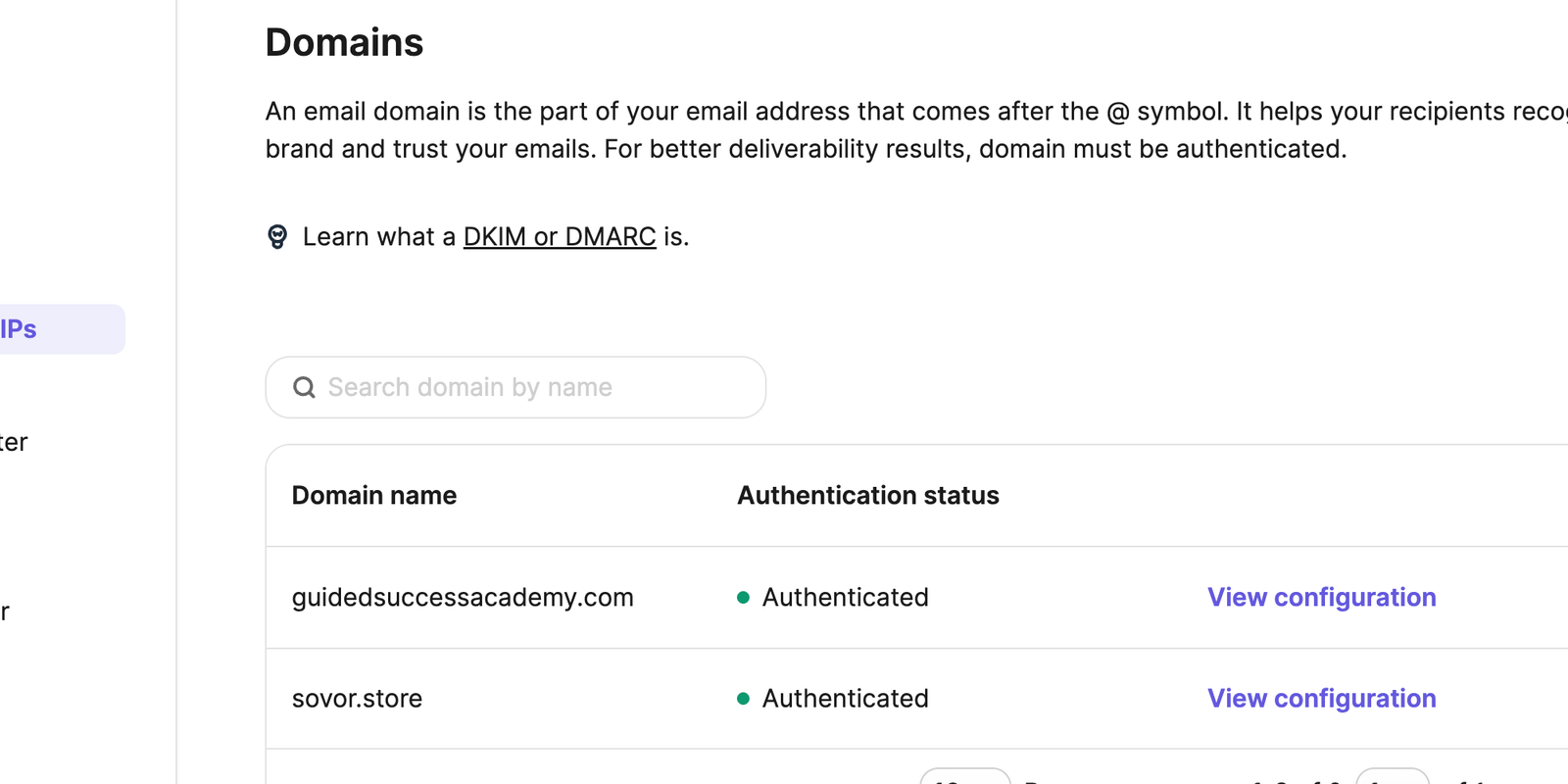
GSA also authenticated sending domains for both guidedsuccessacademy.com and sovor.store in Brevo. That setup is useful evidence of deliverability preparation, but it is not proof of campaign performance. Actual open rates, click rates, and revenue attribution should be reported only from a dated campaign dataset.
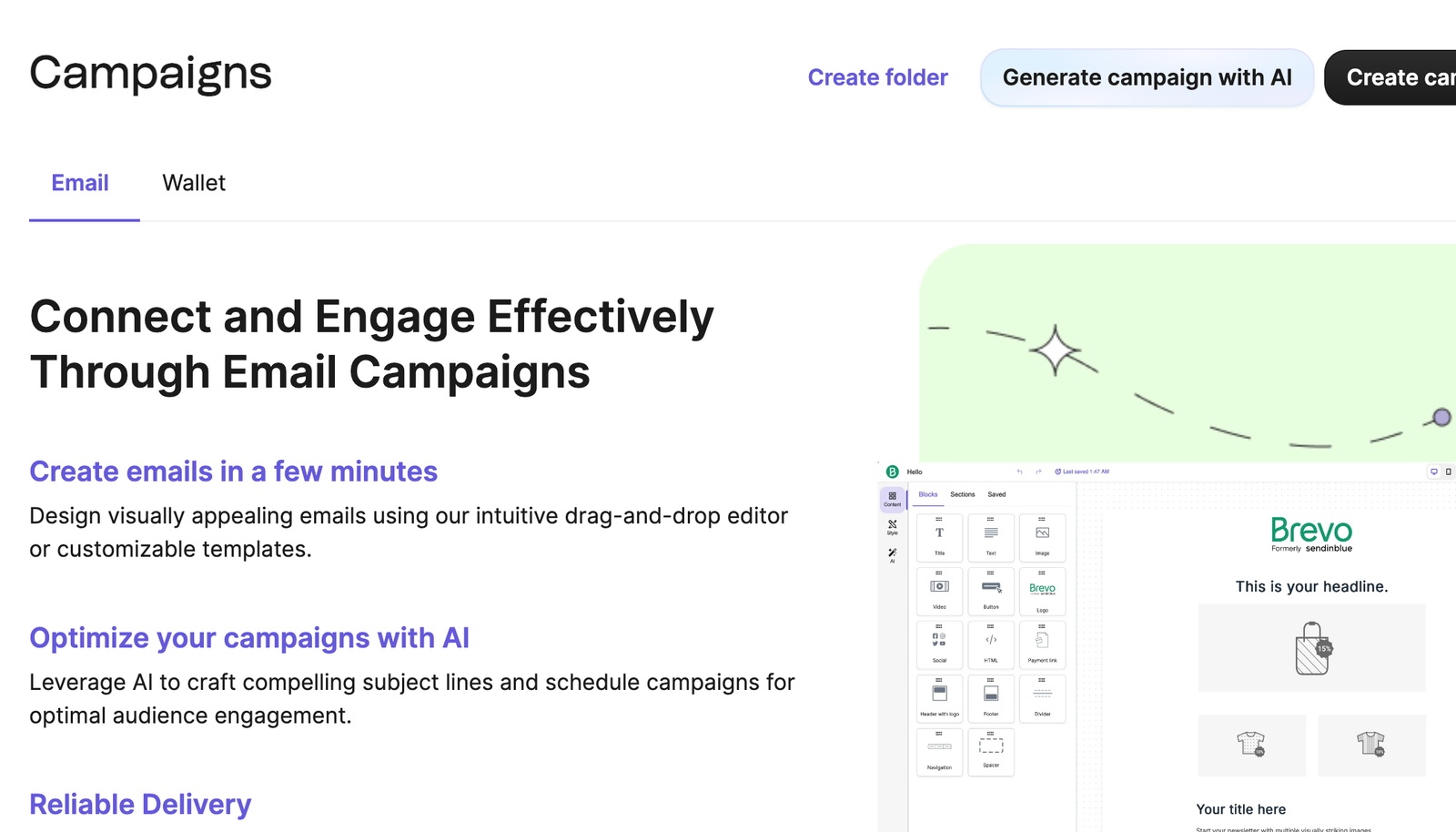
GSA’s implementation provides a concrete example of how email campaigns, authenticated domains, and an API-backed newsletter workflow fit together. The images below illustrate the setup and workflow surface; they are not campaign-performance claims.
Choose Brevo if you want a flexible starting point, transactional email access, and a system that can grow beyond broadcasts. Look elsewhere if your main requirement is the deepest possible Shopify behavior model and advanced ecommerce attribution from day one.
2. Klaviyo: Best for Advanced Ecommerce Lifecycle Marketing
Klaviyo is positioned much more directly around B2C and ecommerce data. Its Shopify integration materials describe syncing customer buying behavior and preferences, segmentation, email, SMS, push, reviews, customer service, and personalized experiences.
Klaviyo’s current pricing page lists a free tier with up to 250 profiles, 500 email sends per month, limited mobile-message credit, reporting, and email support. Its Shopify integration page highlights more than 60 pre-built flows, 150+ email templates, and more than 350 integrations. Klaviyo also reports more than 117,000 Shopify customers; that is a company-reported figure and should be treated as such.
The reason to choose Klaviyo is not simply its feature count. It is the value of connecting behavioral and purchase data to lifecycle decisions. A store with enough customer activity to justify detailed segments, product recommendations, win-back flows, and cross-channel messaging may benefit from that depth.
The trade-off is cost and operating complexity. A small store with a short list may not generate enough incremental value to justify moving immediately to a sophisticated platform.
Choose Klaviyo when ecommerce data and lifecycle personalization are central to the growth plan. Do not choose it only because it is popular among Shopify brands.
3. Omnisend: Best for Ecommerce-First Multichannel Campaigns
Omnisend is built around ecommerce email, SMS, and web push. Its official materials describe pre-built workflows for cart abandonment, welcome series, post-purchase, and re-engagement. It also supports segmentation, product recommendations, forms, campaigns, SMS automation, and web push.
The current free plan lists 250 contacts and 500 emails per month. The Standard plan lists up to 500 contacts and 6,000 emails per month at the displayed starting tier. Omnisend also advertises more than 280 pre-built integrations and a five-day migration service. These limits and prices are dynamic, so check the pricing page at the time of purchase.
Omnisend is attractive when the store wants a pre-built ecommerce workflow rather than a general email tool that must be configured from scratch. Its main question for a buyer is whether the included channels and automation depth justify the ongoing plan cost.
Choose Omnisend when the store wants email, SMS, push, and ecommerce workflows in one product. Compare its contact billing and channel costs carefully before assuming it is cheaper than alternatives.
4. Mailchimp: Best for Familiar General-Purpose Email Marketing
Mailchimp remains a sensible option for teams that value a familiar editor, broad integrations, and a general marketing platform. Its current free plan is limited to 250 contacts, and its product materials advertise more than 300 integrations, including Shopify.
Mailchimp can be a good fit when the primary need is campaign creation, list management, and straightforward automation. It becomes less straightforward when a Shopify operator needs to compare contact tiers, send limits, overages, advanced flows, and ecommerce-specific segmentation at the same time.
Choose Mailchimp when the team already understands the platform or wants a general marketing tool with a broad ecosystem. Compare the actual plan required for the store’s contact count and automation needs, not only the free entry point.
5. Shopify Messaging: Best for Native Simplicity
Shopify’s current help documentation describes Shopify Messaging, formerly Shopify Email, as a way to create email, SMS, and WhatsApp campaigns from the Shopify admin. It also supports marketing automations. Shopify states that the feature is available to Basic, Grow, Advanced, and Shopify Plus merchants, with pricing calculated according to messages sent.
The strength is setup friction. A merchant may not need another separate customer-data platform to send campaigns and begin basic automation. The weakness is that native simplicity may not be enough when the business needs deeper segmentation, complex lifecycle logic, or a broader data layer.
Choose Shopify Messaging when the main goal is to start communicating with customers quickly inside the existing admin. Move to a dedicated platform when retention workflows become too important or complex for the native tool.
Which Platform Should a Small D2C Brand Choose?
Use this decision sequence:
Under 250 contacts and basic needs: Compare Shopify Messaging, Brevo, Mailchimp, and the free tiers of Klaviyo or Omnisend.
Need transactional API email: Put Brevo on the shortlist because its official materials explicitly cover SMTP and API messaging.
Need advanced purchase-based segments: Compare Klaviyo and Omnisend first.
Need email, SMS, and push in an ecommerce workflow: Compare Omnisend, Klaviyo, and Shopify Messaging.
Already invested in Mailchimp: Calculate migration cost before changing platforms.
Growing quickly: Compare total cost at the next two contact tiers, not only the current plan.
What We Would Measure After Choosing
Do not judge the platform by email sends alone. Run a 30-day baseline and track:
New consented contacts.
Welcome-flow completion.
Abandoned-cart recovery.
Repeat purchase rate.
Revenue per recipient where attribution is available.
Unsubscribe and complaint rate.
Automation failure or correction time.
Monthly software cost per successful outcome.
The best platform is the one that improves the store’s chosen customer workflow enough to justify its cost and maintenance burden.
Final Recommendation
For a small Shopify brand beginning to build owned customer relationships, Brevo is a strong starting point when the business wants email marketing, automation, transactional API access, and room to connect a broader technical workflow. Its free entry and small-business positioning reduce the risk of testing the system.
Klaviyo is a better fit when advanced ecommerce segmentation and lifecycle personalization justify a more specialized platform. Omnisend is a strong alternative for ecommerce-first multichannel automation. Mailchimp suits teams that prioritize general-purpose familiarity and a broad integration ecosystem. Shopify Messaging is the simplest native starting point.
There is no universal best platform. The right choice depends on the first workflow the store needs to improve, the contact and send volume it expects, and how much complexity the team can maintain.
Commercial note: GSA does not currently have active affiliate approval for this comparison. This is an editorial evaluation; verify current terms directly with each provider.
Related GSA Guides
For a broader platform decision, read Shopify vs WooCommerce. For the wider store launch process, use the start an online business roadmap. To measure the operating result, see the ecommerce metrics guide.
Frequently Asked Questions
What is the best email marketing service for Shopify?
For a small Shopify or technical D2C team that needs campaigns alongside API-driven and transactional email, Brevo is the first platform we would evaluate. Klaviyo, Omnisend, Mailchimp, and Shopify Messaging can be better fits for different workflows.
Is Klaviyo better than Brevo for Shopify?
Klaviyo is better suited to advanced ecommerce segmentation and lifecycle personalization when the store has enough customer data and revenue to justify the added complexity. Brevo is a stronger starting point when flexibility, API access, and lower setup burden matter more.
Can Shopify Messaging replace an email marketing platform?
Shopify Messaging can be enough for merchants who want native campaigns and basic automations inside Shopify. A dedicated platform becomes more useful when the store needs deeper segmentation, complex lifecycle workflows, or a broader customer-data layer.
Sources
Shopify Messaging documentation
See which pages lose clicks
Run the free website SEO audit to find the pages Google already shows but that earn almost no clicks, then fix the highest-impact issues first.