

Updated September 2026
🌍 Target Audience: Global E-commerce Founders & Institutional Investors
📅 Last Updated: May 2026
🎯 Core Focus: The definitive guide to Shopify’s corporate governance, founder control, global impact, and ecosystem dominance.
Executive Summary: Who Owns Shopify in 2026?
Understanding who owns Shopify matters more than most store owners realise — ownership structure directly shapes Shopify’s product roadmap, pricing decisions, and long-term direction.
In today’s digital landscape, understanding who owns Shopify is crucial for anyone interested in e-commerce. Shopify has become synonymous with online business solutions, enabling millions of entrepreneurs globally to build their stores with ease. But behind the elegant storefronts and smooth checkouts lies a fascinating corporate structure, a unique voting mechanism, and a multi-billion-dollar global ecosystem.
To truly understand Shopify in 2026, we cannot just ask “who owns the shares?” We must answer the complete 5 Ws and 1 H: Who built it, What do they actually own, Where is their footprint, When did they take over the market, Why did they succeed against giants like Amazon, and How does the CEO maintain ultimate control over the board? This exhaustive awareness guide decodes the DNA of the platform that powers the modern digital economy.
📋 TL;DR — The Shopify Ownership Reality
- The Equity Owners: Institutional investors (like Baillie Gifford, Vanguard, and BlackRock) own the vast majority of Shopify’s financial equity.
- The Voting Control: CEO Tobias Lütke holds a unique “Founder Share” granting him 40% voting power, making him the ultimate decision-maker despite owning less than 7% of the actual financial stock.
- The Ecosystem: Shopify’s true value isn’t just its software; it’s the partner ecosystem (app developers, theme designers, agencies) that generates over $4 for every $1 Shopify makes.
- The Global Footprint: Operating in over 175 countries, Shopify facilitates hundreds of billions in Gross Merchandise Volume (GMV) annually.
WHO: The Founders — Who Owns Shopify and Built It?

The story of who owns Shopify begins with its creation. Shopify was founded in 2006 by Tobias Lütke, Daniel Weinand, and Scott Lake. The trio initially aimed to create an online store for snowboarding equipment, called Snowdevil. However, they soon realized that the platform they built to sell snowboards was far more valuable than the snowboards themselves.
Tobias Lütke, a computer programmer originally from Germany who moved to Canada, was dissatisfied with the existing, clunky e-commerce software available in the early 2000s. Using the Ruby on Rails framework, he built a custom solution. His vision was clear: to simplify the online selling process and democratize commerce for independent creators.
While Daniel Weinand and Scott Lake played significant roles in shaping the platform’s initial offerings and business structure, they eventually transitioned out of the day-to-day operations. Lütke, however, remained at the helm. His combined expertise in technology and business laid the foundation for what Shopify is today, and his unique philosophy—referring to Shopify as “arming the rebels” against massive retail monopolies—has driven the company’s culture for two decades.
HOW: The Unique Ownership and Voting Structure
To fully answer who owns Shopify, you need to understand the dual-class share structure that keeps Tobi Lutke firmly in control despite holding only 6.7% of total shares.
Today, Shopify is a publicly traded company, and its ownership is shared among various stakeholders globally. The company’s shares are traded on the New York Stock Exchange and the Toronto Stock Exchange under the ticker symbol “SHOP”. This means that anyone can invest in Shopify and become a part-owner of this e-commerce giant. However, owning Shopify and controlling Shopify are two very different things.
The “Founder Share” and the 40% Rule
To protect the company from hostile takeovers and short-term activist investors, Shopify implemented a highly unique corporate governance structure. In 2022, shareholders approved a proposal that fundamentally cemented Tobias Lütke’s control.
Lütke was granted a special “Founder Share.” This non-transferable share ensures that, when combined with his Class B shares, Lütke retains exactly 40% of the total voting power of the company. This means that even if his actual financial ownership (the percentage of total shares he holds) dilutes over time due to stock issuances or personal sales, his voting power cannot drop below 40% as long as he remains active in the company as an executive or board member.
Why does a 40% voting bloc matter? In corporate governance, securing 40% of the vote essentially grants Lütke a “Founder’s Veto.” Because it is mathematically incredibly difficult to align 100% of the remaining dispersed public shareholders against him, his 40% bloc effectively dictates board appointments, mergers, acquisitions, and the long-term product roadmap. He doesn’t financially own half the company, but he firmly steers the ship.
Institutional Shareholders
While Lütke holds the voting power, institutional investors hold the financial equity. Major institutional shareholders include massive investment firms and mutual funds like Baillie Gifford, The Vanguard Group, BlackRock, and Morgan Stanley. These entities hold significant stakes in the company on behalf of millions of everyday retirees, pension funds, and retail investors.
These institutional investors play a crucial role in Shopify’s governance. While they cannot easily outvote Lütke, their capital fuels the company’s R&D, and their analytical scrutiny adds a layer of accountability to the company’s operations. Shopify’s commitment to transparency and constant innovation has sustained the trust of these massive financial institutions.
WHAT: What Does Shopify Actually Own?
See also: Shopify Online Store Setup 2026 — complete 9-step launch guide
See also: Shopify Store Setup India 2026 — pricing and localisation guide
See also: Build a 6-Figure Online Business in 2026 — the complete roadmap
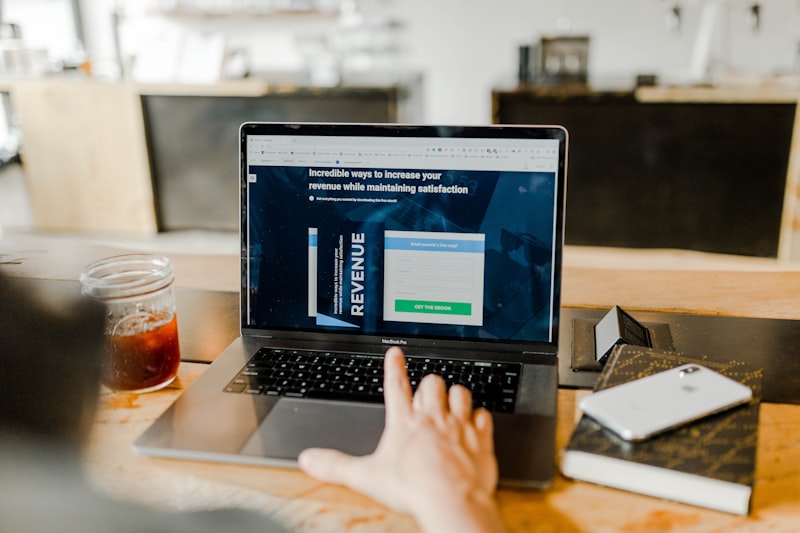
When you ask “Who owns Shopify?”, it is equally important to ask, “What does Shopify own?” The company has evolved far beyond a simple website builder. Over the years, Shopify has expanded its services, including payment processing, shipping solutions, and marketing tools. They have built a sprawling, interconnected digital infrastructure.
- The Core Platform: The proprietary software infrastructure that hosts millions of storefronts globally, handling massive traffic spikes without crashing.
- Shop Pay: This is arguably Shopify’s most valuable hidden asset. Shop Pay is an accelerated checkout system that stores consumer credit card and shipping data. It boasts conversion rates nearly twice as high as standard checkouts. By owning this payment gateway, Shopify captures billions in transaction fees.
- Shopify Plus: The enterprise-level solution designed for high-volume businesses. This tier serves Fortune 500 brands, celebrity product lines, and massive global retailers, locking them into the Shopify ecosystem with advanced APIs and dedicated servers.
- Shopify Point of Sale (POS): Shopify doesn’t just own digital commerce; they own physical retail. Their POS hardware and software sync offline retail locations directly with online inventory databases.
WHY: The “Arming the Rebels” Philosophy
Anyone asking who owns Shopify should also ask why — because Tobi’s founding philosophy explains every major product and pricing decision the company makes.
Why did Shopify succeed in a world dominated by Amazon? The answer lies in their fundamental business philosophy.
Amazon aggregates products. They want consumers to buy from Amazon, minimizing the brand identity of the individual seller. Shopify took the exact opposite approach. Shopify provides the invisible backend infrastructure that allows individual brands to build direct, meaningful relationships with their own customers.
Tobias Lütke famously referred to this as “arming the rebels.” If Amazon is the retail empire, Shopify provides the software weaponry for independent entrepreneurs to fight back, build their own brand equity, own their customer data, and control their own destinies.
| Metric | The Aggregator (e.g., Amazon) | The Infrastructure (Shopify) |
|---|---|---|
| Customer Ownership | Marketplace owns the customer data and email list. | The brand fully owns the customer data and direct relationship. |
| Brand Identity | Standardized product pages; brand is secondary to price. | Fully customized storefronts; brand narrative takes priority. |
| Competition | Platform may launch private-label competitors against top sellers. | Platform only succeeds when the merchant succeeds; alignment of interests. |
WHERE: A Truly Global Footprint
While headquartered in Ottawa, Canada, Shopify’s operational reality is entirely borderless. The company operates on a “Digital by Design” framework, meaning its workforce is distributed remotely across the globe.
Geographically, Shopify’s impact on e-commerce is immense. The platform supports millions of businesses across more than 175 countries. It facilitates multi-currency transactions, calculates complex international import duties dynamically at checkout, and translates storefronts into dozens of languages via Shopify Markets.
WHEN: The Timeline of E-Commerce Dominance
The answer to who owns Shopify has evolved significantly since 2004 — from a single founder to a publicly traded company with millions in institutional investment.

To understand the scale of Shopify’s ownership and growth, we must look at its historical timeline. Its growth trajectory has been nothing short of remarkable.
- 2006: Officially launches after the founders built custom software for their snowboard shop.
- 2009: Launches the Shopify API and App Store. This is the pivotal moment Shopify transitions from a simple tool to a global ecosystem, allowing third-party developers to build and sell software extensions.
- 2013: Launches Shopify POS, bridging the gap between digital and physical retail.
- 2015: Shopify goes public on the NYSE and TSX, fundamentally changing its ownership structure by inviting in global institutional and retail investors.
- 2017: Introduces Shopify integrations with major social media platforms, pioneering the “social commerce” movement.
- 2020-2021: Experiences hyper-growth during global lockdowns, as millions of traditional brick-and-mortar retailers rely on Shopify to digitally transform overnight.
- 2022: Shareholders approve the “Founder Share,” securing Tobias Lütke’s 40% voting power.
- 2026 & Beyond: Continued expansion into enterprise commerce (Shopify Plus) and B2B wholesale infrastructure.
Challenges, Opportunities, and The Future
For store owners wondering who owns Shopify and what that means for their business — the ownership structure directly impacts platform fees, feature priorities, and long-term stability.
Despite its massive success, Shopify faces challenges such as increased competition and evolving global market demands. Rival platforms, open-source architectures, and social media networks attempting to build their own native checkouts pose continuous threats.
However, these challenges also present opportunities for innovation. By continuously improving its offerings, Shopify maintains its competitive edge. The rise of mobile commerce, augmented reality shopping, and integrated social selling are trends that Shopify is actively addressing.
As we look ahead, the future of Shopify appears highly promising. With ongoing massive investments in backend technology, AI-driven merchant tools, and user experience, the platform is well-positioned to adapt to changing market dynamics. The company’s relentless focus on innovation will likely drive its growth for decades to come.
To wrap up, understanding who owns Shopify provides vital insights into the company’s operations and governance. With strong founder-led leadership, diverse institutional ownership, and a commitment to democratizing commerce, Shopify continues to be the undisputed infrastructure leader in the digital sector. Whether you are a budding global entrepreneur or an established enterprise business, Shopify offers the engineered tools necessary to succeed in the modern marketplace.
🏠 Build Your Shopify Ecosystem — Start With the Right Hosting
Your Shopify store is just one piece. A fast blog and landing page stack drives the organic traffic that fills it. These are the three hosts we recommend for Shopify sellers in 2026.
*Affiliate links help support our free content. We only recommend tools we have tested.
📧 Best Marketing Tools 2026
The exact tools used by GSA and 50+ Indian D2C founders we work with.
(Affiliate links — we earn a small commission at no extra cost to you.)
📨 Brevo
Email + WhatsApp marketing. Free up to 300 emails/day. Best for Indian SMBs. No credit card.
🎨 Elementor
Build high-converting landing pages without code. Used by 10M+ sites. Best WP page builder.
📚 Recommended Reading
Handpicked by Arvind — books that actually changed how I think about this topic.
🌎 $100M Offers: How To Make Offers So Good People Feel Stupid Saying No
🌎 The Lean Startup
🌎 Launch: The Secret Formula to Sell Almost Anything Online
The question of who owns Shopify is ultimately about trust — and Shopify’s founder-led structure gives it a stability that public-company-only competitors lack.
📚 Related Reading
Frequently Asked Questions (FAQs)
1. Who founded Shopify?
Shopify was founded by Tobias Lütke, Daniel Weinand, and Scott Lake in 2006.
2. How does Shopify make money?
Shopify generates revenue through subscription fees, transaction fees, and additional merchant services like payment processing and capital lending.
3. Does Tobias Lütke own 100% of Shopify?
No. While Tobias Lütke is the CEO and founder, he owns a single-digit percentage of the financial equity. However, through a special “Founder Share,” he controls 40% of the voting power, effectively giving him ultimate control over company decisions.
4. Is Shopify suitable for small businesses?
Yes, Shopify is engineered to cater to businesses of all sizes, from day-one small startups to billion-dollar global enterprises.
5. Can I use Shopify for free?
Shopify offers a 3-day trial period.
6. What are the fees associated with Shopify?
Fees vary depending on the plan you choose, including base monthly subscription fees, third-party app costs, and credit card transaction fees.
7. How does Shopify support entrepreneurs globally?
Shopify provides massive ecosystem resources, including extensive API documentation, tutorials, 24/7 customer support, and a community forum of partner developers.
8. Can I sell internationally with Shopify?
Yes, Shopify natively allows you to sell to customers worldwide. Features like Shopify Markets support international shipping, localized pricing, and multi-currency payments.
9. What payment options does Shopify offer?
Shopify supports hundreds of multiple payment gateways globally, including third-party credit card processors, PayPal, Apple Pay, and its proprietary Shopify Payments gateway.
10. How secure is Shopify?
Shopify is Level 1 PCI compliant and offers bank-level SSL encryption natively to ensure secure transactions for buyers and sellers.
11. Can I customize my Shopify store?
Absolutely. Shopify offers a massive directory of themes and deep Liquid-code customization options to tailor your storefront architecture to your exact brand specifications.
12. What is Shopify Plus?
Shopify Plus is an enterprise-level solution designed for high-volume businesses with advanced needs, offering dedicated servers, specialized APIs, and custom checkout experiences.
📚 Continue Your Learning: Related Guides
Deepen your understanding with these expert resources from the Sovor library:
-
📖
Sovor Infrastructure Tech Stack
Category: Tech -
📖
Online Business Plan for Indian Professionals
Category: Strategy
See which pages lose clicks
Run the free website SEO audit to find the pages Google already shows but that earn almost no clicks, then fix the highest-impact issues first.