
Direct answer: Tour-operator SEO is package-intent SEO. A buyer searching for a tour operator is not asking for a definition of travel. They are comparing a route, a duration, a group size and a price. The page that answers the package wins the next click.
Who this is for
This is for a tour operator who needs package pages that bring the right group, not generic travel traffic. It is not a traveller’s package brochure. The question is which package intent the operator can own first.
Why a generic travel page does not own the query
“Travel” is a category. “Tour operators in Dehradun” is a local business query. “Dehradun to [destination] tour package” is a trip query. Each needs a different page. A generic page can introduce the operator, but it cannot answer the route, the stay, the inclusions and the dates.
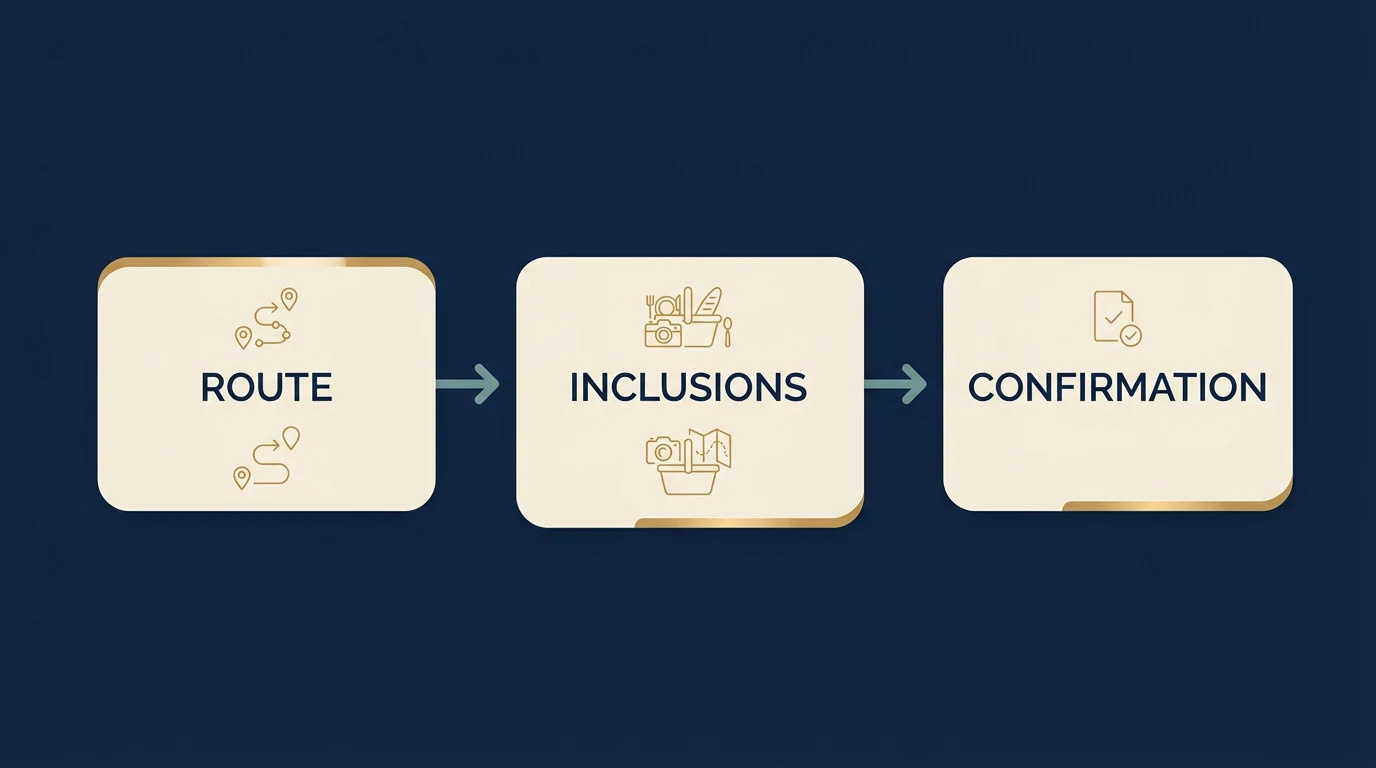
At a glance: the package page contract
| Field | Why the buyer checks it | What it does not prove |
|---|---|---|
| Route and duration | Whether the trip fits the dates | That the route is available every week |
| Stay and transport | Comfort and total cost | That every hotel is equivalent |
| Inclusions and exclusions | Final price comparison | That no local fee appears later |
| Group size and support | Safety and attention | That the trip is right for every age |
| Cancellation terms | Risk | That plans will not change |
Decision table: which package page to build
| Package type | Buyer’s first question | Page proof | Do not assume |
|---|---|---|---|
| Day tour | What is included in one day? | Timeline, pickup, entries | A day tour is the same as a taxi |
| Multi-day tour | Where do we sleep and eat? | Hotels, meals, transport | The itinerary is flexible without notice |
| Pilgrimage | Is the route and support appropriate? | Darshan timing, accessibility, support | Every pilgrim has the same needs |
| Adventure | Is it safe for our group? | Operator credentials, age limits, gear | Thrill copy is proof |
What the demand estimate says
Third-party keyword estimates about 1,900 monthly searches for “travel agency in Dehradun.” “Tour operators in Dehradun” is a related operator query. The estimate is not a package forecast. It shows the local category has demand; the package page must earn the specific trip.
What a package page must include
The package page is the product page. It has to make the trip comparable without inventing availability.
- Itinerary: a day-by-day sequence with realistic travel time.
- Stay: the accommodation category and what is not guaranteed.
- Transport: pickup, vehicle and transfer rules.
- Meals and entries: what is included and what the buyer pays separately.
- Group size: minimum, maximum and age or mobility limits.
- Cancellation: the terms in plain language.
- Confirmation: how and when the operator confirms the dates.
A package page that hides the exclusions creates a price dispute later. A page that states them builds trust before the enquiry.
What to measure
Measure the package query, not the whole site. Record impressions, clicks, enquiries and the share of enquiries that match the package. A route page that attracts the wrong group size is not a success. The package page should be judged on the quality of the trip conversation, not only the number of form fills.
The catch
Package demand is fragmented and seasonal. A route can be popular in one month and quiet in another. A page that shows a fixed itinerary without dates or availability can create false confidence. State the season and the confirmation step.
Free check: inspect five package SERPs
- Search five package queries from Dehradun.
- Record whether the result is a local operator, a national platform, a directory or a blog.
- Note the fields the winning result shows.
- Compare your page with the winner on route, price, inclusions and next step.
- Fix the first missing field.
Common mistakes
- Publishing a package page without a day-by-day plan. The buyer cannot compare the trip.
- Assuming every date is available. State the confirmation step.
- Advertising a hotel category as a specific hotel. That creates a trust problem at check-in.
- Leaving out local entries and transfers. The final price becomes a surprise.
- Using adventure language without safety proof. The buyer needs limits and credentials, not adrenaline copy.
The package page should make the trip easy to compare and the next step easy to take.
FAQ
Should every route have its own page?
Only when the route has a real offer and enough distinct information. Duplicate route pages weaken the cluster.
Do tour operators need a blog?
Only if it answers trip questions the package page cannot. A blog is not a substitute for the package page.
Can a tour operator rank without reviews?
Reviews help trust, but they are not the only field. Route clarity, inclusions and response also matter.
What is the first page to fix?
The package with the clearest demand and the weakest current answer.
Is this a booking guarantee?
No. It is a package-page decision.
Related
Demand figures are third-party estimates. Itineraries and availability change. No booking or revenue guarantee is made.